

Solar Sector Enters a New Era of Intelligence and Resilience as MESIA Unveils 2026 Outlook at World Future Energy Summit
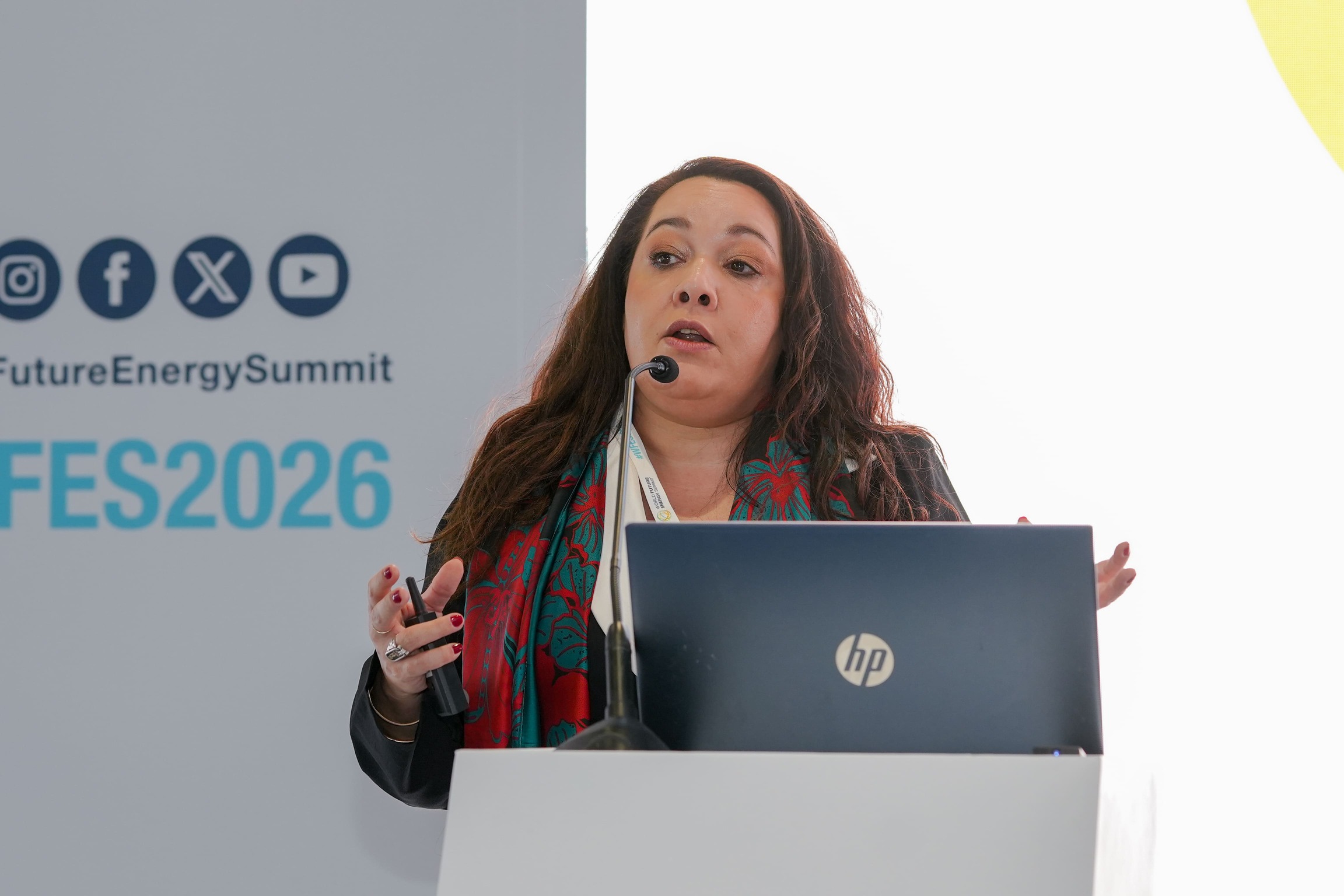
Hinde Liepmannsohn
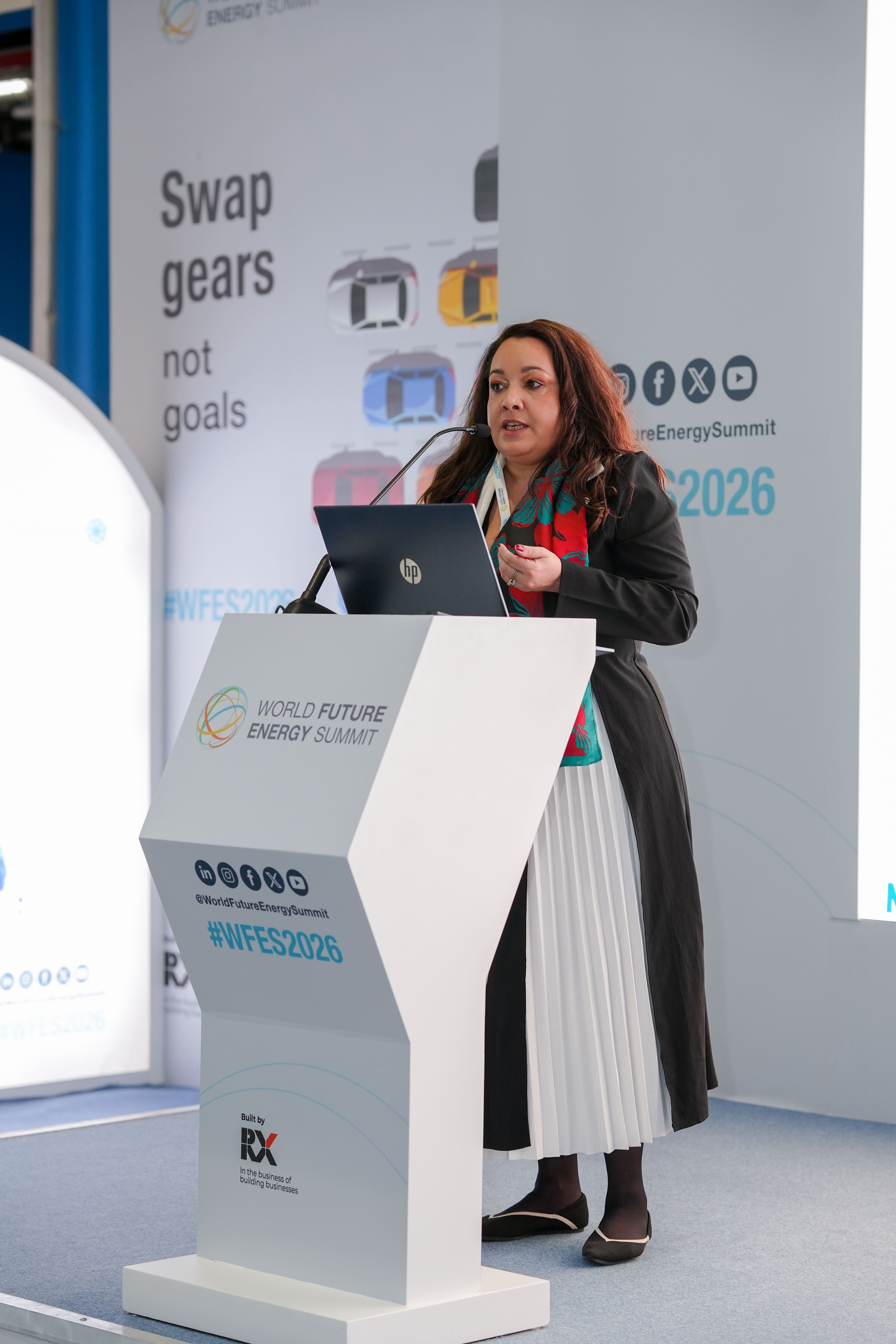
Executive Director at Middle East Solar Industry Association 1
Solar Sector Enters a New Era of Intelligence
Released during the Summit, the report, now in its 11th year, delivers valuable insights and the latest market updates across more than 14 countries in the region. Developed by industry experts, the 2026 edition covers key developments in technology, policy, and financing, while highlighting the major drivers shaping solar growth in the Middle East and North Africa (MENA). It paints a nuanced, yet confident, picture of a market navigating global headwinds while accelerating regional execution.
While global solar additions are expected to plateau for the first time in two decades due to policy and supply-chain recalibration, MESIA’s analysis shows MENA moving in the opposite direction, transitioning from ambition-led growth to enforceable delivery at scale.
“The story of solar in MENA is no longer about catching up,” explained Hinde Liepmannsohn, Executive Director at Middle East Solar Industry Association. “It is about setting the terms of what a renewable-dominant energy system looks like in some of the world’s most demanding operating conditions.”
According to the report, 2025 marked another landmark year for solar investment across the GCC, with more than US$19 billion in new solar contract awards, driven by utility-scale projects in Saudi Arabia, the UAE, and Egypt. But the Solar Outlook Report 2026 makes it clear that the next growth chapter will be determined by grid readiness, storage deployment, and digital intelligence, rather than generation capacity alone.
The report identifies that across the region, transmission infrastructure is being reinforced at an unprecedented scale. It asserts that high-voltage corridors, grid-forming technologies, and large-scale battery energy storage systems (BESS) are increasingly central to national energy strategies, enabling solar to shift from a variable resource to a dispatchable, reliable pillar of power systems.
“In markets like Saudi Arabia and the UAE, solar is no longer being planned in isolation,” added Liepmannsohn. “It is being engineered as part of an integrated system that includes storage, advanced forecasting, and grid intelligence. That system's mindset is what will define the region’s competitive edge over the next decade.”
The report highlights that MENA’s utility-scale BESS capacity is expected to rise from under 3 GW today to more than 29 GW by 2030, driven by record-breaking solar-plus-storage projects now under construction or financial close regionwide.
Digitalisation, AI, and the rise of the ‘Green AI economy’
One of the report’s defining themes is the convergence of solar energy with artificial intelligence, automation, and data infrastructure. It says that as hyperscale data centres and AI-driven industries expand across the Middle East, access to low-cost, low-carbon electricity is emerging as a strategic economic differentiator. The report points to major regional initiatives that combine gigawatt-scale solar, long-duration storage, and advanced energy management systems to power the next wave of digital growth. These developments, MESIA argues, are positioning the Middle East as a global hub for what it terms the ‘Green AI economy,’ where clean power underpins both industrial competitiveness and decarbonisation goals.
“Solar in MENA is becoming the backbone of digital economies, smart cities, and energy-intensive technologies that demand reliability around the clock,” explained Liepmannsohn.
The Solar Outlook Report 2026 also underscores how innovation in the region is increasingly shaped by local operating conditions. From PV technologies engineered to withstand extreme heat and humidity, to waterless robotic cleaning systems achieving efficiency rates of up to 99.5 per cent, the desert is now seen as a catalyst for technology evolution. At the same time, hybrid models, such as agrivoltaics, are gaining momentum, demonstrating how solar deployment can support food security, water efficiency, and land optimisation in arid environments.
“The region is proving that solutions designed for MENA don’t just work locally, they raise the global benchmark,” said Liepmannsohn.
The report concludes that collaboration between governments, utilities, developers, and technology providers will be critical as the region moves from rapid build-out to long-term system performance. “With nearly US$80 billion in solar projects currently in procurement or development across MENA, the challenge ahead lies in synchronising generation, transmission, storage, and digital infrastructure at pace,” explained Liepmannsohn. “The fundamentals are strong, the pipeline is real, and the policies are increasingly enforceable. What matters now is execution, and MENA is demonstrating that it has both the scale and the sophistication to deliver.”
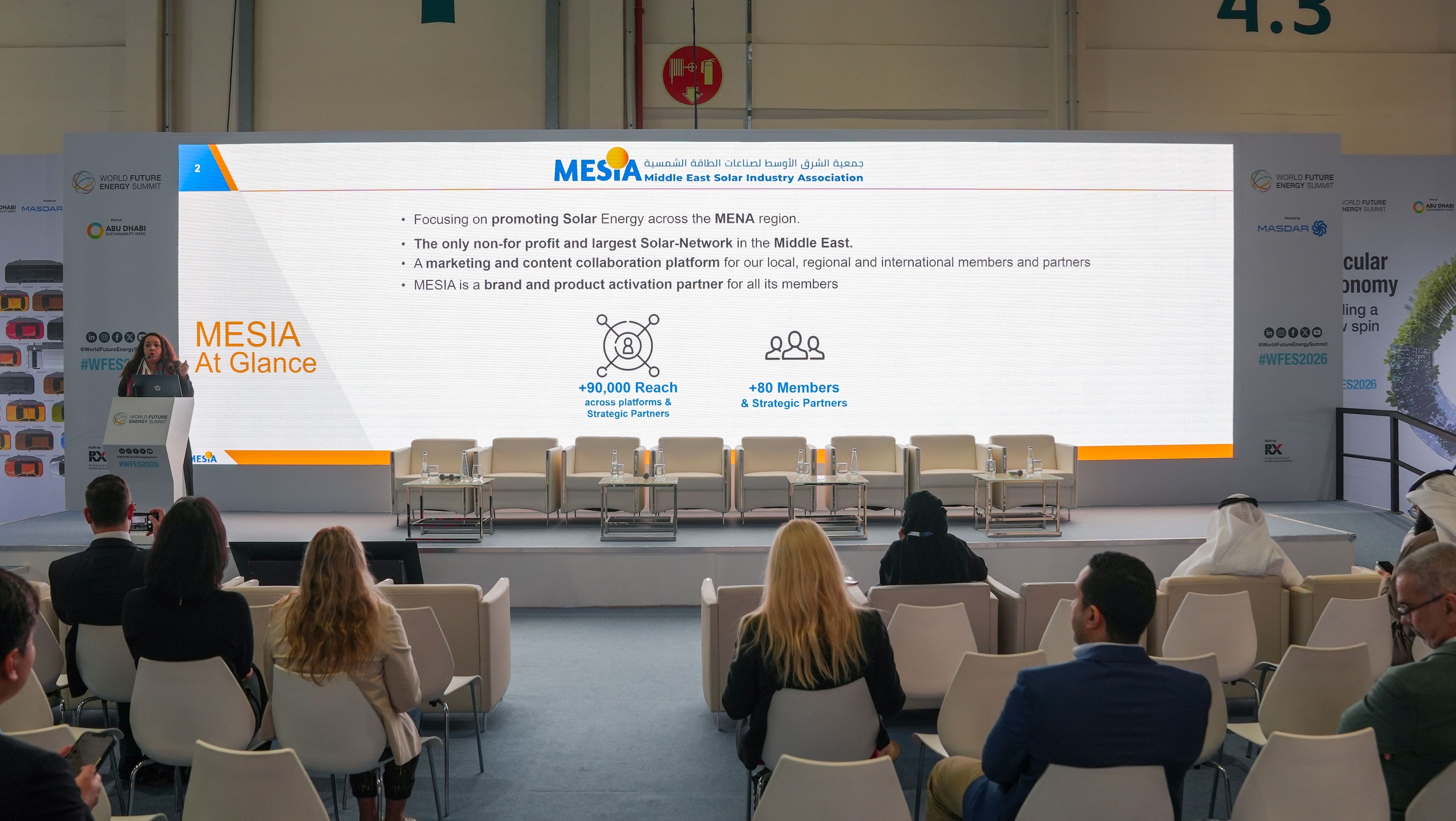
The Solar Outlook Report 2026 was launched during the World Future Energy Summit 2026, taking place at the ADNEC Centre Abu Dhabi as part of Abu Dhabi Sustainability Week hosted by Masdar. Solar and clean energy are central pillars of the Summit’s conference and content programme. The Summit continues until Thursday night (January 15).
For more information, please visit - https://www.worldfutureenergysummit.com/
Deepra Ahluwalia
Action Global Communications
+971 564770995
email us here
Legal Disclaimer:
EIN Presswire provides this news content "as is" without warranty of any kind. We do not accept any responsibility or liability for the accuracy, content, images, videos, licenses, completeness, legality, or reliability of the information contained in this article. If you have any complaints or copyright issues related to this article, kindly contact the author above.
